The architectural metamorphosis of the global monetary landscape is currently reaching a critical inflection point as the integration of sovereign quantum ledger financial infrastructure strategies becomes the primary requirement for institutional survival and market dominance. For global treasury managers, private equity partners, and sovereign wealth architects, the transition toward a subatomic-hardened financial ecosystem is no longer a peripheral academic pursuit but a central mandate for navigating the hyper-speed volatility of the decentralized digital age.
This complex evolution represents a fundamental departure from traditional relational databases and legacy clearinghouse protocols toward a sentient, self-correcting ledger environment where quantum key distribution and entangled data nodes operate in a unified orchestration to secure massive transactional throughput with zero-latency finality. In an era defined by the convergence of high-frequency algorithmic trading, decentralized liquidity pools, and the looming reality of quantum supremacy, the ability to maintain a “sovereign” cryptographic perimeter is the ultimate competitive advantage for any organization seeking to insulate its capital from systemic systemic obsolescence.
Achieving a truly resilient and unhackable financial posture requires a clinical orchestration of hardware-based entropy generators, post-quantum cryptographic primitives, and distributed ledger synchronization that ensures the institution remains the absolute arbiter of its own monetary intelligence. As the global marketplace shifts toward a model of “programmable value,” the capacity to host and execute private, high-fidelity financial smart contracts locally has become the holy grail for institutional leaders who prioritize fiscal confidentiality above all else.
This infrastructure is not merely a collection of cryptographic hashes; it is a strategic asset that allows for the seamless fusion of subatomic physics and institutional-grade reliability. We are witnessing a massive movement toward the utilization of “quantum-resistant” hardware that can perform complex verification and settlement while maintaining total immunity to the brute-force capabilities of tomorrow’s supercomputers.
Furthermore, the integration of real-time predictive risk modeling and automated liquidity provisioning allows for a proactive rather than reactive response to the sophisticated social engineering and state-level attacks that characterize the current digital frontier. Ultimately, the goal of these elite ledger strategies is to provide a frictionless environment where the pursuit of capital innovation and market expansion is never hindered by the limitations of classical security vulnerabilities or centralized intermediary bottlenecks.
This holistic approach ensures that every transaction is converted into actionable strategic capital, transforming a standard corporate balance sheet into a hyper-responsive, sentient entity that can navigate the uncertainties of the subatomic era with clinical precision and absolute fiscal authority.
A. The Mechanics Of Quantum Key Distribution In Banking

At the core of a sovereign ledger is the implementation of Quantum Key Distribution (QKD), which utilizes the principles of subatomic physics to ensure that any attempt to intercept a financial signal is immediately detected. This process involves the transmission of individual photons between banking nodes, where the act of measurement itself alters the state of the data, providing a “physical” layer of security that software alone cannot replicate.
Banks are now deploying these systems across dedicated fiber-optic networks to secure inter-bank settlements and internal treasury movements. This creates a “sovereign” communication channel that is theoretically immune to any form of passive eavesdropping or mathematical decryption.
By utilizing QKD, institutional lenders can provide their high-net-worth clients with a level of transactional privacy that exceeds current military standards. This hardware-first approach is the non-negotiable foundation for establishing a truly secure and autonomous monetary infrastructure.
B. Post Quantum Cryptographic Primitive Integration
As the threat of quantum computing looms, traditional encryption standards like RSA and ECC are being replaced by Post-Quantum Cryptography (PQC) within the ledger’s fabric. These are mathematical algorithms, such as lattice-based or code-based cryptography, that are specifically designed to be resistant to the Shor’s algorithm used by quantum computers.
Implementing PQC requires a total overhaul of the enterprise’s signature schemes and public key infrastructure to ensure that historical data cannot be harvested now and decrypted later. This “harvest now, decrypt later” threat is a primary concern for sovereign wealth funds and long-term private equity holders.
By adopting these primitives today, financial architects are effectively “future-proofing” their assets against the inevitable arrival of the first commercially viable quantum processor. This proactive stance is a key differentiator for firms catering to the most sophisticated and risk-aware clientele in the global economy.
C. Navigating Decentralized Sovereign Ledger Synchronization
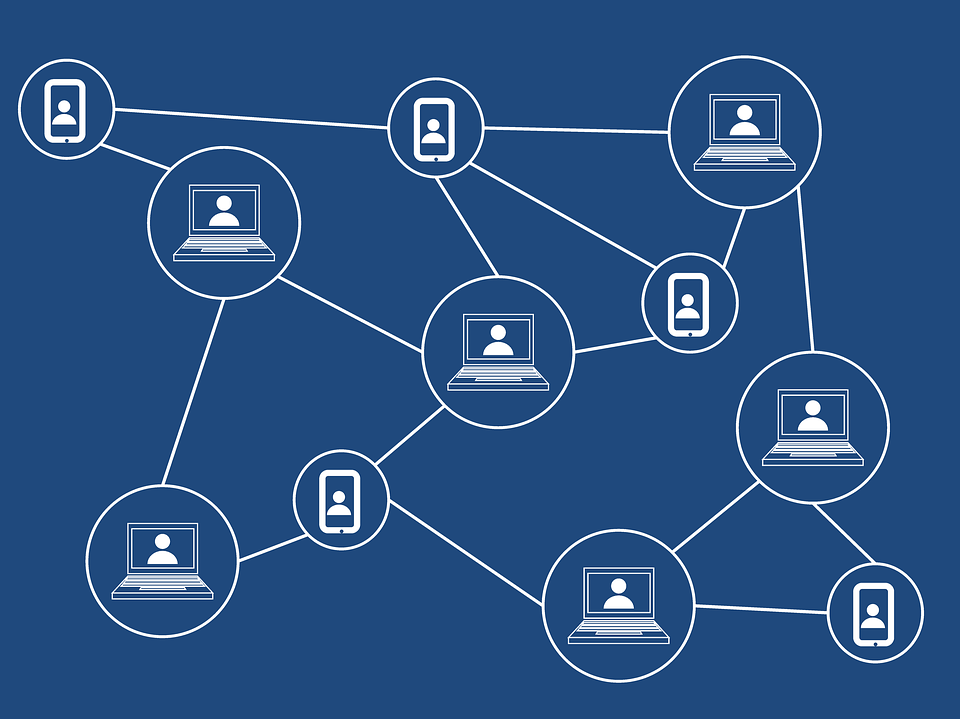
Unlike public blockchains, a sovereign quantum ledger utilizes a “permissioned” synchronization model that ensures data integrity across multiple high-security nodes without exposing sensitive details to the public. This process utilizes a subatomic “clock” to synchronize transactions across global jurisdictions with nanosecond precision.
This high-speed synchronization is essential for high-frequency trading and the management of large-scale institutional liquidity pools. It eliminates the “latency” and “settlement risk” associated with traditional centralized clearinghouse models.
By maintaining a private, distributed copy of the ledger, the institution ensures that its operations can continue even in the event of a total network failure in one specific region. This geographic decentralization is a fundamental pillar of institutional financial health and systemic resilience.
D. The Role Of Smart Contract Programmable Liquidity
Sovereign ledgers allow for the creation of “programmable liquidity,” where financial assets are managed by smart contracts that execute autonomously based on pre-defined market conditions. This allows for the automation of complex multi-party agreements, such as debt restructuring or cross-border trade finance, without the need for human intermediaries.
These contracts are written in “hardened” languages that are mathematically verified to prevent bugs or logic errors that could be exploited by malicious actors. This clinical approach to financial programming is a hallmark of elite institutional technology management.
By utilizing programmable liquidity, firms can significantly reduce their operational costs and increase the “velocity” of their capital. It transforms the balance sheet from a static record into a dynamic, self-optimizing engine for wealth generation.
E. Hardware Security Modules and Subatomic Entropy
To generate the truly random numbers needed for high-level encryption, sovereign ledgers utilize hardware-based quantum random number generators (QRNGs). These devices extract entropy from subatomic fluctuations, providing a level of “pure” randomness that classical software algorithms simply cannot achieve.
These QRNGs are integrated into specialized Hardware Security Modules (HSMs) that store the ledger’s master keys in a physically isolated and tamper-resistant environment. Any attempt to physically breach the module results in the immediate destruction of the keys, preventing unauthorized access.
For institutional players, these HSMs act as the “root of trust” for the entire financial infrastructure. They ensure that the “sovereign” nature of the ledger is protected by the physical laws of the universe rather than just a digital password.
F. Real Time Predictive Risk And Liquidity Modeling
Elite ledger strategies utilize “agentic” AI systems that constantly monitor the transactional environment for any sign of unusual behavior or systemic risk. This includes analyzing the “velocity” of capital movements and the “health” of various liquidity nodes across the global network.
By identifying potential bottlenecks or “liquidity crunches” in real-time, the system can autonomously reallocate resources to ensure that the institution remains solvent and liquid. This “self-healing” capability is essential for managing the high-speed volatility of modern markets.
This proactive approach to risk management provides a significant advantage over traditional banks that rely on “lagging” financial indicators. It allows the institution to navigate crises with a level of precision and confidence that is simply impossible for a human team alone.
G. Cross Border Jurisdictional Compliance Automation
Navigating the global regulatory landscape is a massive burden for any multinational institution, but sovereign quantum ledgers can automate much of this work through “compliance-as-code.” The ledger constantly monitors its own transactions and automatically generates the reports required by various international agencies.
This ensure that the organization is always in alignment with the latest AML (Anti-Money Laundering) and KYC (Know Your Customer) rules without compromising the privacy of its clients. It reduces the risk of heavy fines and legal challenges associated with human error in reporting.
By providing a real-time, immutable view of the firm’s compliance status, the system allows the legal team to focus on high-level strategy rather than administrative paperwork. It is a clinical application of autonomy to the field of international finance.
H. The Impact Of Tokenized Real World Assets
The “tokenization” of real-world assets—such as real estate, fine art, and private equity—allows these illiquid assets to be traded on a sovereign quantum ledger with the same ease as a stock or a currency. This unlocks trillions of dollars in “trapped” value and provides a new source of collateral for institutional lending.
Each token represents a fractionalized ownership stake in the underlying asset, which can be transferred instantly and securely between ledger nodes. This democratization of high-value assets is a major driver of growth in the modern digital economy.
Institutional architects are using this technology to create “bespoke” investment products that were previously impossible to manage. It is a fundamental shift in how “value” is defined, stored, and moved across the global network.
I. Quantum Resistant Asset Protection Wrappers
To protect digital wealth from the threat of future decryption, institutions are using “quantum-resistant asset protection wrappers.” These are legal and technical structures that wrap high-value digital assets in multiple layers of post-quantum encryption and multi-jurisdictional legal protection.
These wrappers ensure that even if a specific cryptographic standard is broken in the future, the underlying assets remain secure. It is a “defense-in-depth” strategy that prioritizes the long-term survival of the institution’s capital.
For family offices and sovereign wealth funds, these wrappers provide the “peace of mind” needed to commit large-scale capital to the digital frontier. It is the ultimate expression of fiscal sovereignty and wealth preservation.
J. High Performance Reporting and Audit Transparency
Managing an institutional-grade ledger requires a high level of transparency and regular reporting for both internal and external stakeholders. Sovereign ledgers provide “audit-ready” data in real-time, allowing for a level of transparency that was previously impossible.
This “self-auditing” capability reduces the cost and time required for traditional third-party audits. It builds a foundation of “intellectual trust” that makes it easier to secure additional capital or partner with other elite institutions.
Utilizing automated reporting software can streamline this process, providing the board of directors with a “live” view of the firm’s financial health. It is a professional approach to “ledger maintenance” that is essential for long-term success.
K. Leveraging Mezzanine Liquidity In Ledger Markets
In addition to primary senior debt, sovereign ledgers utilize “mezzanine liquidity” to provide a further layer of capital for high-stakes transactions. This subordinated liquidity sits between the senior capital and the equity layer, providing a higher yield for the provider and greater capital efficiency for the user.
Mezzanine liquidity tranches are often provided by specialized credit funds or decentralized autonomous organizations (DAOs) that have a higher risk tolerance. This layer of the capital stack is essential for “filling the gap” in large-scale acquisitions or infrastructure projects.
By utilizing mezzanine liquidity, firms can scale their operations more quickly without taking on the burden of excessive senior debt. It is a sophisticated way to balance risk and reward within the digital capital stack.
L. The Role Of Sovereign Wealth Security Standards
Sovereign wealth funds set the benchmark for ledger security, utilizing the most advanced technologies and the most rigorous operational protocols. Mirroring these standards allows private institutions and family offices to benefit from “state-level” security.
This involves implementing strict “two-man rules” for all administrative actions and conducting regular, third-party security audits. It is a commitment to operational excellence that goes beyond just software and hardware.
By aligning with sovereign-grade standards, a brand builds a massive amount of institutional trust. It signals to the market that the assets are being handled with the highest level of professionalism and care.
M. Zero Knowledge Proofs For Fiscal Confidentiality
Zero-Knowledge Proofs (ZKPs) allow one party to prove to another that they know a specific piece of information without actually revealing the information itself. In a sovereign ledger, ZKPs enable private transactions where the amount and the participants remain hidden from the public.
This “privacy-by-design” ensures that institutional-scale movements of capital do not alert the broader market or reveal the strategic intent of the institution. It provides the “cloistered” environment needed for high-stakes financial deployments.
ZKPs are becoming a standard feature in sovereign financial infrastructure, allowing for compliance with regulatory reporting requirements while maintaining total transactional confidentiality. It is the ultimate fusion of transparency and privacy.
N. The Convergence Of Quantum And Automated Clearing
Traditional clearinghouses are being replaced by “automated clearing” systems that operate directly on the sovereign quantum ledger. This eliminates the “T+2” settlement cycle, allowing for the instant transfer of ownership and funds across different jurisdictions.
This instant finality reduces “counterparty risk” and ensures that capital is never “trapped” in a settlement bottleneck. It is a critical requirement for maintaining a high velocity of capital in the modern global economy.
By removing the need for centralized intermediaries, automated clearing also significantly reduces the cost of every transaction. It is a fundamental shift in the “plumbing” of the global financial system.
O. Creating A Resilient Infrastructure For Monetary Sovereignty
The ultimate goal of sovereign quantum ledger financial infrastructure strategies is the creation of a perennial and growing fiscal legacy. This is achieved by viewing the ledger as a powerful engine for wealth creation rather than just a record-keeping tool.
Achieving this requires a commitment to radical innovation, clinical risk management, and continuous technological evolution. It is a journey toward a world where the enterprise is always “investable” and its assets are always protected by the laws of physics.
The systems we build today will define the quality of our monetary portfolio for generations to come. By mastering the art of the subatomic ledger, the modern financial steward secures their place at the very center of the global digital economy.
Conclusion

Quantum ledgers are the fundamental requirement for the future of institutional finance. Quantum key distribution provides the clinical defense needed against future intercept threats. Post-quantum primitives ensure that today’s capital remains secure in tomorrow’s computational era. Distributed synchronization allows for nanosecond precision and total systemic resilience. Smart contracts provide the programmable liquidity needed for automated fiscal optimization. Hardware entropy generators ensure that the root of trust is built on subatomic randomness. Real-time predictive modeling allows for the autonomous management of liquidity and risk.
Compliance-as-code ensures that global regulatory requirements are met with surgical precision. Tokenization unlocks the trapped value of real-world assets for institutional deployment. Asset protection wrappers provide the sovereign shield needed for long-term wealth preservation. Automated clearing removes the intermediaries and bottlenecks of the legacy financial system. The future of monetary authority is built on the foundations of subatomic logic and intelligence.