The architectural and industrial landscape of the modern era is undergoing a profound paradigm shift as global manufacturers and urban planners begin to reject the sterile, inorganic aesthetics of the past in favor of biological integration. This movement toward biophilic industrial design represents a sophisticated convergence of evolutionary psychology, advanced material science, and ecological responsibility that aims to harmonize the human-made environment with the natural world. For decades, the industrial sector prioritized raw functionality and cold efficiency, often resulting in workspaces and products that contributed to sensory deprivation and environmental degradation.
However, a deeper understanding of human biology has revealed that our cognitive and physiological well-being is intrinsically linked to our exposure to natural patterns, textures, and living systems. By embedding these organic elements into the very fabric of industrial production, forward-thinking organizations are discovering that they can significantly enhance worker productivity, reduce stress levels, and foster a culture of creative innovation. This transition is not merely a superficial application of greenery or natural light; it is a fundamental restructuring of the manufacturing process to utilize regenerative materials, biomimetic shapes, and closed-loop systems that mimic the resilience of a forest floor.
As international regulatory bodies and premium investors place a higher premium on environmental and social governance, the adoption of biophilic principles has become a critical differentiator for companies seeking long-term capital appreciation. We are seeing a massive movement where the factory floor is being reimagined as a living laboratory, utilizing vertical gardens for natural air filtration and smart glass to synchronize internal environments with the movement of the sun. For the modern industrialist, the challenge lies in balancing the high precision of machine-driven production with the fluid, unpredictable beauty of biological forms.
This strategic alignment ensures that as the organization grows, its physical footprint acts as a catalyst for environmental restoration rather than a burden on the local ecosystem. Ultimately, the goal of biophilic design is to create a frictionless relationship between the technosphere and the biosphere, ensuring that the progress of civilization supports the flourishing of all life forms. This holistic approach to creation represents a new era of industrial maturity, where the definition of success includes the health of the planet and the vitality of the human spirit.
A. The Core Principles Of Evolutionary Aesthetics

Biophilic design is rooted in the “biophilia hypothesis,” which suggests that humans possess an innate tendency to seek connections with nature and other forms of life. In an industrial context, this means utilizing visual fractals and non-linear shapes that mirror the complexity found in the natural world.
These organic patterns have been shown to lower heart rates and improve concentration levels among employees who spend long hours in manufacturing environments. By moving away from harsh right angles toward fluid, sweeping curves, a product can evoke a sense of comfort and familiarity that increases consumer trust.
The application of evolutionary aesthetics also extends to the choice of color palettes, prioritizing earth tones and “living” hues that respond to changes in lighting. This creates a dynamic environment that feels alive and responsive to the presence of its occupants.
B. Biomimicry In Structural Engineering
Biomimicry involves studying the solutions found in nature to solve complex human problems, such as the structural efficiency of honeycombs or the drag reduction of shark skin. Industrial designers use these templates to create products that are stronger, lighter, and more efficient than traditional counterparts.
By utilizing additive manufacturing and generative design software, engineers can produce components with intricate internal lattices that mimic the structure of bird bones. This reduces material waste during the production phase while enhancing the performance characteristics of the final product.
Nature has had billions of years to perfect its designs, and by tapping into this vast library of biological intelligence, industrial firms can bypass many of the trial-and-error phases of development. This results in a faster time-to-market for products that are inherently optimized for their specific functions.
C. Integrating Living Systems For Air Filtration
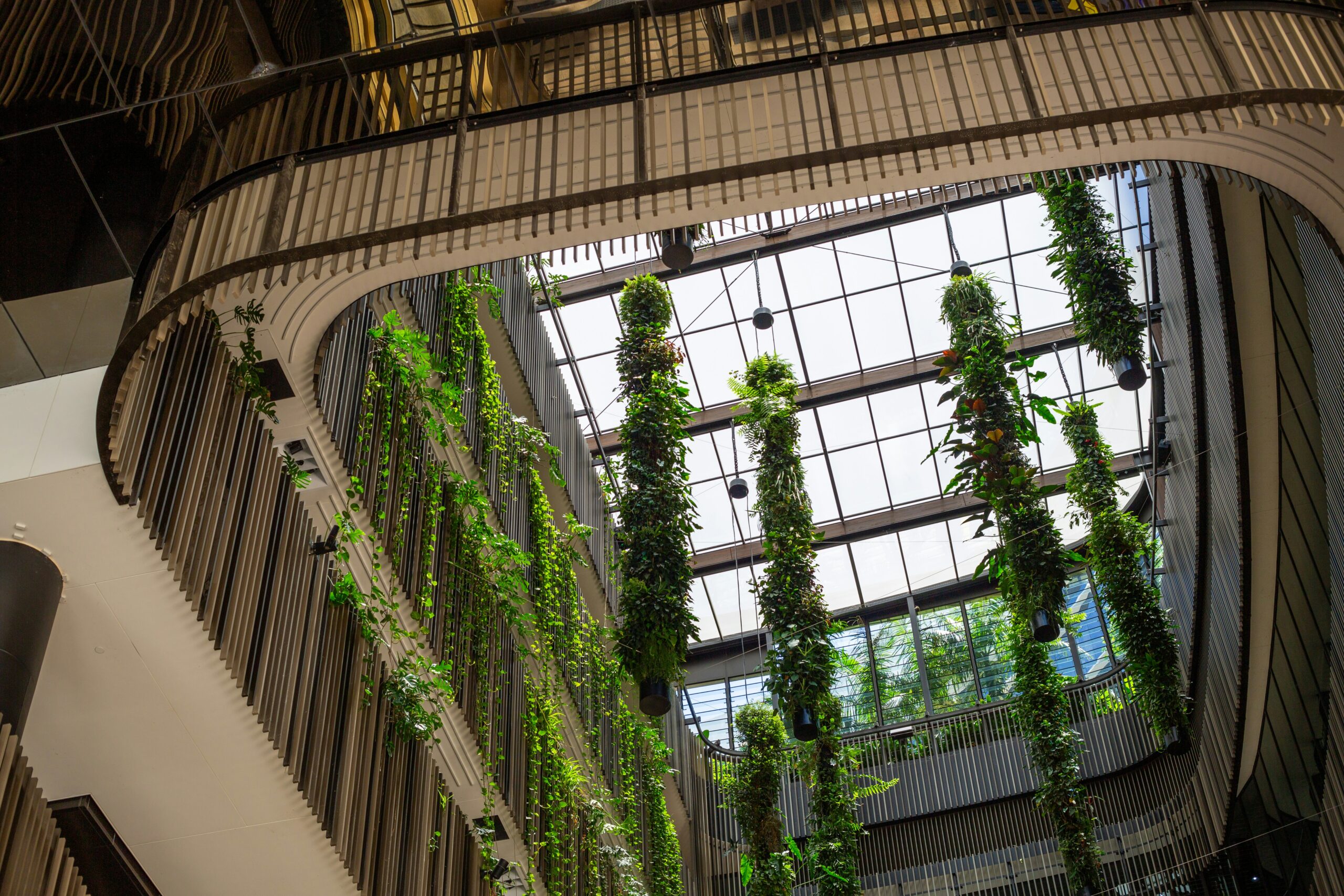
One of the most practical applications of biophilic design in a factory setting is the use of “living walls” or vertical forests to manage indoor air quality. Certain plant species are exceptionally efficient at removing volatile organic compounds and carbon dioxide from the atmosphere.
This biological filtration system reduces the energy load on mechanical HVAC systems, leading to significant cost savings and a smaller carbon footprint. It also creates a lush, vibrant atmosphere that improves the overall morale and mental health of the workforce.
The maintenance of these systems is now largely automated through IoT sensors that monitor soil moisture and nutrient levels. This ensures that the living infrastructure remains healthy and productive with minimal human intervention.
D. Smart Daylight Harvesting And Circadian Alignment
Human biology is governed by a circadian rhythm that is deeply influenced by the quality and timing of light exposure. Biophilic industrial facilities utilize smart glass and heliostats to maximize the entry of natural daylight into the deepest parts of the building.
This practice, known as daylight harvesting, has a direct impact on the production of melatonin and cortisol, ensuring that workers remain alert during the day and can rest effectively at night. It also provides a visual connection to the outdoor environment, reducing the feeling of isolation in windowless industrial zones.
Advanced lighting systems can also mimic the shifting color temperature of the sun throughout the day, providing a subtle, artificial sun for night shifts. This helps to mitigate the negative health effects associated with irregular working hours.
E. Material Innovation Using Mycelium And Bio Polymers
The next frontier of sustainable growth lies in the use of bio-fabricated materials such as mycelium-based composites and seaweed-derived polymers. These materials are grown rather than manufactured, requiring far less energy and water than traditional plastics or metals.
Mycelium, the root structure of mushrooms, can be molded into high-strength packaging, acoustic panels, and even structural insulation. At the end of its lifecycle, the material is completely biodegradable, returning nutrients to the soil.
Transitioning to these “living materials” allows an industrial firm to decouple its growth from the extraction of finite fossil fuels. It represents a move toward a truly circular economy where waste is seen as a valuable feedstock for the next generation of products.
F. Acoustic Ecology And Natural Soundscapes
Industrial environments are often characterized by high levels of mechanical noise that can lead to cognitive fatigue and hearing damage. Biophilic design addresses this through the use of natural acoustic buffers and the introduction of “pink noise” from water features.
Acoustic panels made from recycled natural fibers or moss can absorb high-frequency sounds, creating a much more pleasant auditory environment. This allows for better communication between team members and reduces the stress associated with loud machinery.
In some high-end facilities, subtle soundscapes featuring birdsong or rustling leaves are used to mask industrial hums. These sounds have been clinically proven to enhance mood and improve the speed of cognitive processing.
G. Thermal Comfort Through Passive Bio Climatic Design
Passive design utilizes the orientation of the building and the thermal mass of natural materials to regulate temperature without excessive energy use. Using rammed earth, timber, or stone in industrial construction provides a stable internal climate that resists external temperature swings.
Green roofs act as a natural insulation layer, keeping the building cool in the summer and warm in the winter. They also manage stormwater runoff and provide a habitat for local pollinators, further enhancing the site’s ecological value.
By reducing the reliance on mechanical cooling and heating, a firm can protect itself against fluctuations in energy prices. This long-term resilience is a key component of a sustainable growth strategy.
H. The Psychology Of Restorative Workspaces
A biophilic workspace is designed to be “restorative,” meaning it allows the user to recover from mental fatigue through effortless attention to natural elements. This is based on Attention Restoration Theory, which suggests that nature provides a break for our directed-attention mechanisms.
Designers include “prospect and refuge” points—elevated views of the factory floor combined with cozy, enclosed areas for quiet focus. This balance of perspectives satisfies deep-seated human instincts for safety and observation.
When employees feel that their physical environment supports their well-being, they demonstrate higher levels of engagement and lower rates of absenteeism. The physical space becomes a powerful tool for talent retention in a competitive labor market.
I. Water Management And Regenerative Hydro Logic
Biophilic industrial design treats water as a precious resource that should be visible and integrated into the landscape. On-site bioswales and constructed wetlands are used to treat wastewater and manage runoff naturally.
These systems use specific aquatic plants and bacteria to break down industrial pollutants, turning gray water into a resource that can be reused for irrigation or cooling. This reduces the burden on municipal water systems and lowers operational costs.
Visible water features also provide a soothing sensory experience for workers and visitors. The sound and movement of water act as a focal point for relaxation and mental clarity.
J. Biophilic Branding And Consumer Trust
For a consumer-facing product, biophilic design acts as a silent communicator of quality and sustainability. A product that feels “natural” and uses organic textures is often perceived as being more durable and safer than a purely synthetic alternative.
This “bio-branding” helps to build a deep, emotional connection with the customer base. It signals that the company is aligned with the values of the modern, environmentally-conscious consumer.
In the premium market, the use of genuine natural materials—such as sustainably sourced wood or polished stone—provides a tactile luxury that plastic cannot replicate. This allows for higher price points and better margins.
N. The Role Of AI In Ecological Modeling
Industrial firms are now using artificial intelligence to model the ecological impact of their designs before they are ever built. These “digital twins” of biophilic buildings can predict how natural light, airflow, and plant growth will interact over decades.
AI can also optimize the placement of biophilic elements to achieve the maximum benefit for the occupants. This ensures that every plant and window is placed with scientific precision to enhance well-being.
This data-driven approach removes the guesswork from biophilic design, providing a clear return on investment for stakeholders. It allows for the scaling of organic principles across large, complex industrial portfolios.
O. Future Trends In Bio Integrated Infrastructure
We are moving toward a future where the distinction between “building” and “organism” will continue to blur. Imagine industrial warehouses that can grow their own repairs through self-healing bio-concrete or roofs that generate electricity through integrated algae panels.
This “living infrastructure” will be the foundation of a truly sustainable civilization. It represents the ultimate expression of human ingenuity working in partnership with the genius of nature.
The pioneers of this movement are already reaping the rewards in terms of efficiency, brand loyalty, and employee satisfaction. The journey toward a biophilic future is not just a choice; it is the inevitable next step in our industrial evolution.
Conclusion

Biophilic design is the primary vehicle for sustainable industrial transformation. Organic aesthetics restore the cognitive energy needed for modern innovation. Biomimicry provides the structural blueprints for the next generation of hardware. Living filtration systems turn industrial zones into net-positive environments. Circadian alignment is a mandatory requirement for high-performance workforces.
Mycelium and bio-polymers are replacing finite resources in the manufacturing chain. Passive bioclimatic strategies provide a robust shield against rising energy costs. Restorative workspaces are the ultimate tool for attracting and retaining top talent. Regenerative water management ensures long-term operational resilience and safety. A sovereign relationship with nature is the hallmark of a truly advanced civilization.