Introduction: The Necessary Leap Beyond Fifth Generation Connectivity
The global deployment of Fifth Generation (5G) cellular technology has successfully delivered the foundational promise of significantly enhanced mobile broadband speeds, minimal latency, and the capacity to connect millions of devices simultaneously, enabling the first true wave of practical applications in the Internet of Things (IoT) and laying the groundwork for basic automation in urban environments across the world.
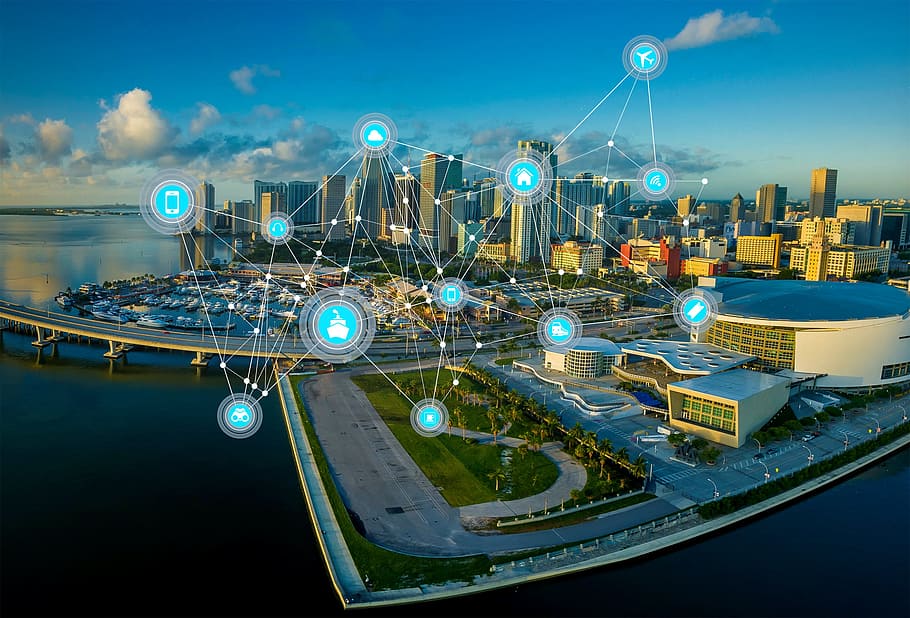
While 5G represents a major technological advancement, the ambitious, long-term vision of a truly Smart City—an urban ecosystem where infrastructure, services, and human life are seamlessly managed, optimized, and predictive in real-time—requires a level of instantaneous data throughput, ubiquitous reliability, and hyper-precise sensing capability that even the most advanced 5G networks cannot fully achieve, indicating an inherent, looming computational ceiling.
This recognition has driven researchers, governments, and industry leaders to rapidly shift their focus toward the design and standardization of Sixth Generation (6G) wireless technology, which is currently projected to arrive around the year 2030, promising a quantum leap in performance that will extend far beyond simple speed improvements to integrate new paradigms like artificial intelligence, pervasive sensing, and ultra-reliable holographic communication.
Therefore, 6G is not merely an incremental upgrade but rather an essential technological catalyst engineered to unlock the genuine potential of complex urban automation, enabling cities to move beyond basic connectivity to achieve unprecedented levels of efficiency, sustainability, and quality of life for their residents in the coming decades.
Pillar 1: Defining the Transformative Capabilities of 6G
6G is defined by performance metrics that are orders of magnitude beyond 5G, fundamentally changing what is technically possible within a smart urban environment.
A. Core Performance Metrics
The leap from 5G to 6G is characterized by exponential increases in speed, capacity, and responsiveness.
- Ultra-High Peak Data Rates: 6G is expected to achieve peak data rates in the Terabits per second (Tbps) range, potentially 100 to 1,000 times faster than 5G. This speed is crucial for instantaneous transfer of massive data volumes, such as holographic streaming and ultra-high-definition video feeds.
- Sub-Millisecond Latency: While 5G promised low latency, 6G aims for sub-100 microsecond (µs) latency(effectively near-zero lag). This is vital for mission-critical applications like remote surgery and highly reliable autonomous vehicle control.
- Massive Connectivity Density: 6G will support tens of millions of devices per square kilometer, ensuring that every sensor, appliance, person, and vehicle in a dense urban environment can communicate reliably without network congestion.
B. The Pervasive Sensing Paradigm
A core innovation of 6G is its transformation of the network itself into a sensor.
- Integrated Sensing and Communication (ISAC): 6G is designed to simultaneously communicate data and sense the environment using the same radio waves. The network can detect location, speed, distance, and even the shape and composition of objects without relying on dedicated sensors.
- Real-Time Digital Twin Creation: This integrated sensing enables the network to create a highly accurate, constantly updated digital twin of the entire city infrastructure in real-time. This digital twin allows city managers to simulate interventions and predict failures with unprecedented accuracy.
- Beyond GPS Localization: 6G utilizes signals in the Terahertz (THz) spectrum and advanced beamforming techniques to provide localization accuracy down to the centimeter or even millimeter level, far exceeding the capabilities of traditional GPS for precision robotics and indoor navigation.
C. The Role of the Terahertz Spectrum
Accessing higher frequency ranges is essential for achieving the required speed and capacity.
- Unlocking New Bandwidth: 6G moves into the Terahertz (0.1 to 10 THz) range of the electromagnetic spectrum, which provides exponentially more available bandwidth than the current millimeter-wave bands used by 5G.
- Challenges of THz: The extremely high-frequency THz signals are highly susceptible to atmospheric absorption and physical blockage (like buildings), meaning 6G will rely on hyper-dense networks of small cells and dynamic smart surface reflectors.
- Energy Efficiency Focus: Despite the intense processing requirements, 6G research prioritizes massive improvements in energy efficiency per bit transmitted, ensuring that the densified infrastructure does not lead to unsustainable power consumption.
Pillar 3: Revolutionizing Urban Mobility and Transportation
The low latency and hyper-reliability of 6G are critical enablers for fully autonomous, safe, and efficient transportation systems in a smart city.
A. Autonomous Vehicle Networks
6G provides the necessary instantaneous communication required for managing fleets of driverless cars and drones.
- Vehicle-to-Everything (V2X) Communication: 6G enables ultra-reliable, low-latency V2X communication, allowing autonomous vehicles (AVs) to instantly share data on speed, location, trajectory, and road conditions with other cars, traffic signals, and the central city management system.
- Collective Intelligence: This instantaneous communication facilitates collective decision-making among AV fleets, optimizing traffic flow across entire grids, eliminating phantom traffic jams, and achieving a theoretical flow rate far exceeding human-driven limits.
- Safety and Redundancy: The near-zero latency ensures that critical commands, such as emergency braking alerts, are received instantaneously, preventing collisions with unparalleled reliability.
B. Dynamic Traffic Management
City infrastructure can become intelligent, adapting instantly to changing urban conditions.
- Smart Traffic Lights: Traffic signals become fully dynamic and AI-controlled, using 6G-enabled real-time sensing data on pedestrian flow, bicycle traffic, and vehicular density to optimize signal timing every few seconds, reducing commuter wait times drastically.
- Drone Delivery and Air Traffic: 6G provides the precise positioning and command reliability needed to manage thousands of delivery drones and air taxis safely within defined urban corridors, creating a new, three-dimensional layer of commerce and transport.
- Integrated Public Transit: Public buses and trains communicate their passenger loads and precise locations instantly, allowing the network to dynamically adjust routes and schedules in response to unexpected congestion or special events, maximizing service efficiency.
C. Predictive Infrastructure Maintenance
The integration of sensing capabilities transforms how transport infrastructure is maintained.
- Structural Health Monitoring (SHM): Nanoscale sensors embedded in bridges, roads, and tunnels continuously transmit detailed structural integrity data via the 6G network. The predictive model anticipates failures before they become visible problems.
- Wear and Tear Forecasting: The network analyzes data from millions of vehicles, precisely calculating road surface wear and tear in real-time. This allows city planners to schedule repairs exactly when needed, maximizing road lifespan and minimizing unnecessary construction disruption.
Pillar 4: Smart City Services and Utility Optimization

Beyond mobility, 6G enables unprecedented levels of efficiency and personalization in public utilities and essential urban services.
A. Energy Grid Optimization and Sustainability
6G is essential for the transition to decentralized, smart, and sustainable energy systems.
- Smart Grid Management: The network supports bidirectional communication with millions of smart meters, local solar panels, and battery storage units, allowing the grid to dynamically balance power supply and demand in real-time, integrating high volumes of intermittent renewable energy.
- Demand-Side Response: Utilities can use the network to instantly communicate with consumer appliances (with consent), optimizing energy use during peak demand, reducing the need for costly and polluting peak-generation power plants.
- Micro-Grids and Resilience: 6G enables the rapid formation and isolation of local micro-grids during a major power outage, ensuring critical infrastructure (hospitals, emergency centers) remains powered and resilient against widespread failure.
B. Public Safety and Emergency Response
The low latency and pervasive sensing create a safer, more responsive urban environment.
- Ultra-Reliable Emergency Communication: First responders rely on 6G to ensure guaranteed communication channels in dense urban environments or during disasters, supporting high-definition video feeds, real-time drone reconnaissance, and augmented reality (AR) assistance tools for complex operations.
- Predictive Policing and Incident Response: AI systems analyze massive streams of real-time sensor data (acoustic sensors, traffic flow, environmental readings) through the 6G backbone to predict the location and likelihood of incidents, allowing resources to be deployed proactively rather than reactively.
- Disaster Monitoring: 6G supports rapidly deployable mesh networks and can penetrate difficult areas, allowing instantaneous communication of environmental conditions (flood levels, air quality, seismic data) during catastrophic events.
C. Healthcare and Well-being
The reliability and speed of 6G will profoundly impact urban healthcare delivery and personal wellness.
- Remote Surgery and Telemedicine: Sub-millisecond latency enables true, reliable remote robotic surgery and high-fidelity telemedicine consultations, bringing specialist care to underserved urban populations regardless of physical location.
- Pervasive Health Monitoring: Wearable and embedded sensors collect continuous health data, which is transmitted and analyzed instantly over the 6G network, allowing AI to detect early signs of serious health crises (like heart attacks) and alert emergency services automatically.
- Air Quality and Pollution Control: The network supports a hyper-dense array of environmental sensors, providing block-by-block, real-time mapping of air and water pollution. This data can be used to dynamically reroute traffic or adjust industrial output to protect public health.
Pillar 5: Implementation Challenges and the Road Ahead
Bringing the promise of 6G to fruition within a functioning smart city involves overcoming massive technical, regulatory, and ethical hurdles.
A. Deployment and Infrastructure Costs
The cost and density requirements for 6G are astronomical compared to previous generations.
- Hyper-Densification: 6G requires an unprecedented density of small cells and relay nodes to overcome the signal attenuation in the THz spectrum. This means placing infrastructure on almost every street light, traffic sign, and building facade.
- Fiber Backhaul: Each small cell requires a massive, dedicated fiber-optic backhaul connection to handle the Tbps speeds. The cost of burying or deploying this pervasive fiber infrastructure is immense and time-consuming.
- Standardization and Spectrum Allocation: Global cooperation is required to finalize the 6G technical standardsand agree on the precise allocation and licensing of the highly valuable and scarce Terahertz spectrum, a process that is subject to intense geopolitical negotiation.
B. Data Security and Privacy Concerns
The sheer volume of collected data requires new approaches to security and public trust.
- Pervasive Data Collection: Since the 6G network is an inherent sensor (ISAC), it collects continuous, highly granular data on the location, movements, and activities of all city residents and vehicles. This raises massive privacy alarms.
- Quantum Resistance: 6G security protocols must be designed to be post-quantum secure from the outset, protecting all city data and communications against the anticipated arrival of powerful quantum computers that could break current encryption.
- Zero-Trust Architectures: Smart cities will need to adopt zero-trust security models, where every device, person, and application is verified before access is granted, treating all network traffic as potentially hostile to prevent systemic failure.
C. Regulatory and Ethical Governance
The integration of AI and pervasive sensing demands a proactive regulatory framework.
- AI Ethics and Bias: The AI models managing city services (traffic, policing, resource allocation) must be strictly regulated to prevent algorithmic bias that could disproportionately affect certain neighborhoods or demographics, ensuring fair governance.
- Public Acceptance and Transparency: City governments must foster public trust and acceptance by establishing clear, transparent policies on how pervasive sensing data is collected, stored, anonymized, and used, giving citizens control over their digital footprint.
- Cross-Sectoral Coordination: Implementing 6G requires unprecedented coordination between traditionally siloed departments (Transportation, Energy, Water, Health) and private sector companies, demanding a unified digital governance framework.
Conclusion: The Ultimate Platform for Urban Intelligence

Sixth Generation (6G) technology is the essential infrastructure that will fully realize the vision of the intelligent city.
It offers exponential improvements in speed and reliability, characterized by Terabits-per-second data rates and sub-millisecond latency.
A key innovation is the Integrated Sensing and Communication (ISAC) capability, transforming the network itself into a ubiquitous, real-time sensor.
This sensing ability allows cities to maintain a high-fidelity digital twin for simulating operations and predicting infrastructural failures before they happen.
In mobility, 6G ensures the necessary reliability and speed for managing vast, interconnected fleets of fully autonomous vehicles and drones safely.
For public services, 6G enables dynamic optimization of energy grids and provides ultra-reliable, high-capacity communication for emergency responders.
The shift to the Terahertz spectrum requires massive hyper-densification of small cells and fiber backhaul, presenting immense financial and logistical challenges for urban deployment.
Crucially, the ethical and regulatory hurdles concerning pervasive data collection and the use of potentially biased AI must be addressed proactively to gain public trust.