Introduction: The Inefficiency of Human Innovation Alone
For much of our industrial history, human engineering and architectural design have proceeded along a path characterized primarily by force and excessive energy expenditure, where the fundamental challenges of transportation, climate control, and material science were overwhelmingly solved through sheer brute force—using massive amounts of fossil fuels, employing toxic chemical processes, and relying on high heat and pressure to create products, resulting in a systemic output of inefficiency, pollution, and unsustainable resource consumption.
This conventional approach, often prioritizing short-term financial gain and immediate function over long-term ecological consequence, has created a world riddled with persistent environmental problems, ranging from chronic air and water pollution to the rapid degradation of natural ecosystems that serve as the planet’s essential life-support systems, clearly demonstrating that our current methods of problem-solving are fundamentally misaligned with the planet’s operating instructions.
The complexity and elegance of the natural world, in contrast, offer a profound and readily available library of solutions, perfected over 3.8 billion years of continuous, rigorous research and development, yielding designs that are inherently cyclical, self-assembling, and powered entirely by benign, locally available resources like solar energy and water, showcasing unparalleled levels of material and energy efficiency.
This critical realization has catalyzed the development of Biomimicry, a visionary and transformative discipline that shifts human ingenuity from merely exploiting nature’s resources to actively learning from its genius, seeking to solve human challenges by intentionally emulating nature’s strategies, forms, and processes to create products and systems that are not just functional, but genuinely sustainable and regenerative.
Pillar 1: Understanding the Core Philosophy of Biomimicry
Biomimicry is more than just imitation; it is a discipline rooted in a set of principles that seeks to connect human design with ecological wisdom.
A. The Three Essential Levels of Mimicry
Biomimicry can be applied at increasing levels of complexity and impact, from superficial form to systemic function.
- Form (Mimicking Shape): This is the most literal level of mimicry, where designers copy a specific shape, structure, or aesthetic feature found in nature to improve a product’s function, such as designing a building with a textured façade inspired by a desert cactus to regulate heat.
- Process (Mimicking Function): This level involves copying the manufacturing methods or chemical pathwaysthat organisms use, such as emulating how a mussel creates an adhesive in water or how coral builds its skeleton at ambient temperatures without high heat or toxic solvents.
- Ecosystem (Mimicking System): This is the deepest and most powerful level, where designers emulate the principles of an entire ecosystem, focusing on resource cycling, decentralized cooperation, and diversity, leading to systemic, circular solutions rather than single-product improvements.
B. The Life’s Principles Framework
This framework provides a set of design constraints that guide innovation toward ecological sustainability.
- Evolve to Survive: Organisms and systems are constantly adapting and optimizing, requiring human designs to be flexible, modular, and capable of continual improvement based on feedback.
- Be Resource Efficient (Material and Energy): Nature uses minimal energy, relying mostly on sunlight and using materials sparingly, often recycling everything. Human design must follow suit by favoring low-energy processes.
- Adapt to Changing Conditions: Organisms maintain viability by responding to environmental variabilitythrough robust systems and redundancy, necessitating human products that can function effectively despite external fluctuations.
- Integrate Development with Growth: Nature relies on self-assembly and growth from within, using information rather than external force, pushing human innovation toward methods like 3D printing or nanotechnology.
- Be Locally Attuned and Responsive: Solutions are optimized for their specific local environment, using locally available materials and energy, urging human designers to move away from globalized, one-size-fits-all manufacturing.
- Use Life-Friendly Chemistry: Biological processes use water as a solvent and operate at ambient temperatures and pressures, avoiding the toxic chemicals and high heat that characterize much of industrial chemistry.
C. The Foundational Question
Biomimicry changes the fundamental question designers ask themselves.
- Shifting Focus: Instead of asking, “How can I solve this problem?” the designer asks, “How does nature solve this problem?” (e.g., How does nature manage water runoff? How does nature create color without pigments?).
- Nature as Model: Nature is treated not as a resource quarry but as the model, mentor, and measure for all human endeavor. It provides the pattern, the guidance, and the standard of success.
- Long-Term Testing: The designs found in nature have been tested and optimized through billions of years of natural selection, meaning they are inherently proven to be effective and sustainable within the Earth’s operating constraints.
Pillar 2: Biomimicry in Material Science and Chemistry
Nature often achieves feats of strength, color, and adhesion using processes that are benign, water-based, and highly efficient—a stark contrast to industrial chemistry.
A. Structural Color and Material Efficiency
Emulating how organisms create vibrant colors without toxic dyes or pigments.
- Peacock Feather Structure: Instead of using chemical pigments, the dazzling colors of a peacock feather or a butterfly wing are created by microscopic structures that diffract light. This phenomenon, known as structural color, offers a pathway to durable, fade-resistant, and non-toxic coloration for paints and fabrics.
- Silica Structures (Diatoms): Certain microscopic algae (diatoms) create incredibly complex, porous shells from silica (essentially glass) at ambient temperature. This inspires methods for manufacturing high-strength ceramic or semiconductor materials without massive energy consumption.
- Self-Healing Materials: Drawing inspiration from human skin or tree bark that automatically repairs damage, scientists are developing synthetic materials that can automatically seal cracks or self-repair internal damage, dramatically extending product lifespans and reducing maintenance.
B. Bio-Adhesion and Coatings
Nature’s glues and surfaces are often superior to man-made equivalents, especially in challenging environments.
- Mussel-Inspired Adhesives: Mussels secrete powerful, water-resistant glues that allow them to firmly attach to wet surfaces like rocks. This process has led to the development of new surgical adhesives and industrial coatings that perform exceptionally well underwater or in damp conditions.
- Shark Skin Texture (Drag Reduction): The tiny, tooth-like scales (denticles) on shark skin reduce drag by manipulating water turbulence. Emulating this texture in films applied to ship hulls, aircraft, or pipelines can significantly reduce friction, leading to massive fuel and energy savings.
- Lotus Effect (Self-Cleaning Surfaces): The lotus leaf maintains a perpetually clean surface due to its superhydrophobic, micro-nanoscale texture that prevents water and dirt from sticking. This effect is applied to external paint, textiles, and building glass to create self-cleaning, low-maintenance surfaces.
C. Creating Strength Through Structure
Biological materials achieve incredible strength and resilience using lightweight, common elements.
- Bone and Nacre Structure: Bone (and the inner shell layer, nacre) achieves incredible toughness by layering soft, protein-based materials with hard, mineral components in an organized, brick-and-mortar arrangement. This composite structure prevents cracks from propagating, informing the design of new, lighter, and tougher ceramics and armor.
- Spider Silk: Known for its combination of high tensile strength and elasticity, spider silk is stronger than steel by weight. Scientists are working to synthesize this protein-based fiber for use in medical sutures, lightweight vests, and high-performance, biodegradable textiles.
Pillar 3: Biomimicry in Architecture and Energy
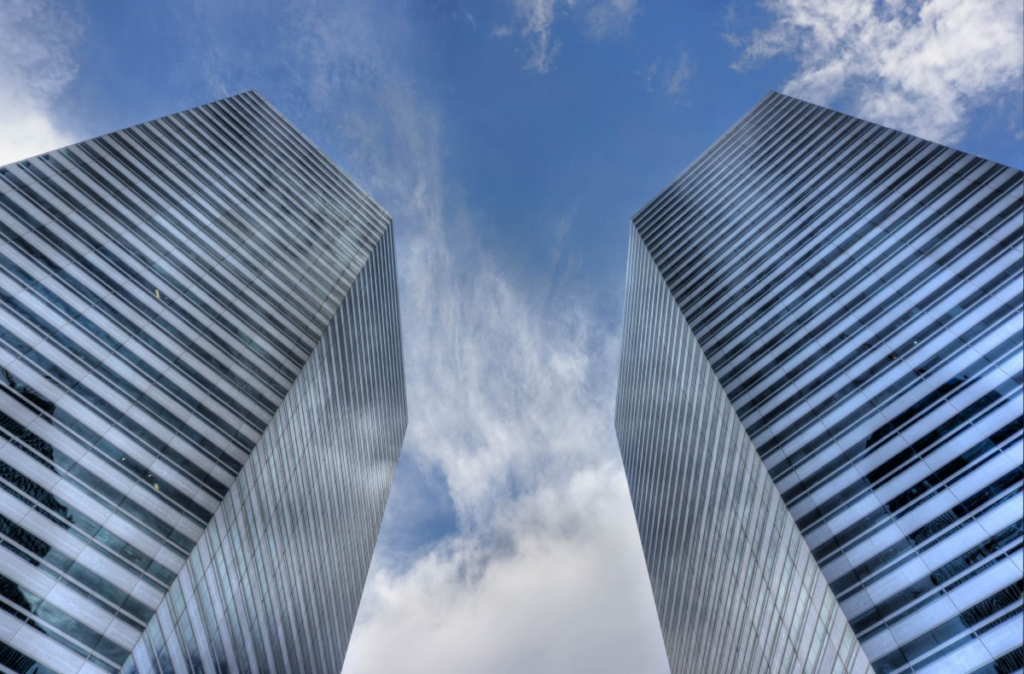
The principles of nature are profoundly changing how we design buildings and manage energy flow.
A. Passive Climate Control
Using natural forms and processes to regulate temperature without relying on mechanical air conditioning.
- Termite Mound Ventilation: The complex, porous structure of a termite mound maintains an incredibly stable internal temperature in hot climates through a system of passive ventilation and convection, allowing hot air to rise and be pulled out through the chimney structure.
- The Eastgate Centre: Architect Mick Pearce explicitly modeled the ventilation system of the Eastgate Centre in Harare, Zimbabwe, after the termite mound. The building uses less than 10% of the energy of comparable conventional buildings for heating and cooling.
- Cactus Inspired Water Collection: The specialized grooves and coatings on the surface of desert cacti can collect and funnel trace amounts of morning dew and fog. This inspires systems designed to passively condense water from the air in arid or semi-arid environments.
B. Optimized Form and Fluid Dynamics
Improving the efficiency of movement through air and water.
- Kingfisher Beak (High-Speed Trains): The sudden shift in air pressure when a Japanese bullet train (Shinkansen) emerged from tunnels caused sonic booms. The designer, Eiji Nakatsu, redesigned the nose of the train to mimic the smooth, non-disruptive entry of the kingfisher’s beak into water, eliminating the boom and reducing noise and energy consumption.
- Humpback Whale Flippers (Wind Turbines): The bumpy, scalloped edges (tubercles) on the leading edge of a humpback whale’s flippers allow it to maneuver efficiently with less drag and greater lift. Applying this design to wind turbine blades and aircraft wings significantly improves their aerodynamic efficiency and lift at slower speeds.
- Boxfish Shape: The seemingly boxy shape of the boxfish is actually highly stable and structurally rigid in water. The form factor has inspired concept cars and naval vessels designed for stability and fuel efficiency.
C. Biological Energy Harvesting
Emulating the ultimate sustainable energy process: photosynthesis.
- Artificial Photosynthesis: Scientists are working to replicate the natural process of photosynthesis—using sunlight, water, and carbon dioxide to produce high-energy chemical fuels (like hydrogen or methanol)—with greater efficiency than plants, offering a potentially limitless source of clean energy.
- Efficient Solar Cell Design: The light-harvesting structures found in leaves and bacteria inspire new designs for solar cells that maximize the capture and transmission of light energy, even in low-light conditions or when the cell is angled away from the sun.
Pillar 4: The Process of Biomimetic Innovation
Implementing biomimicry involves a structured process that moves from biological discovery to engineered application, requiring interdisciplinary collaboration.
A. The “Ask Nature” Phase (Biological Inquiry)
This initial phase focuses on thoroughly understanding the biological inspiration.
- Functional Definition: The design team first defines the specific function they need to achieve (e.g., “Must be strong but lightweight,” “Must manage heat without moving parts”).
- Biological Search: Researchers then scour the biological literature and databases to identify organisms, ecosystems, or natural processes that have already solved that specific function successfully and sustainably.
- Contextual Analysis: It is crucial to understand the biological context, constraints, and limitations of the natural model—where it lives, what energy it uses, and what its final chemical output is—to ensure the solution is truly life-friendly.
B. The “Translate” Phase (Abstraction and Modelling)
Moving from the biological principle to a transferable, technological concept.
- Abstracting the Strategy: The team abstracts the key mechanism or strategy from the organism (e.g., “The termite mound uses the chimney effect to pull air”). This is the key insight, separating the principle from the organism itself.
- Modeling the Mechanism: The biological strategy is translated into engineering models, mathematical formulas, or chemical pathways that can be analyzed, simulated, and tested using human technology.
- Filtering for Sustainability: The model is rigorously checked against the Life’s Principles framework to ensure the engineered solution retains the ecological wisdom and efficiency of the original biological system, preventing “greenwashing” mimicry.
C. The “Emulate” Phase (Application and Testing)
The final step is the creation and verification of the human-engineered product or system.
- Prototyping and Iteration: The abstracted model is used to create physical prototypes which are then tested, analyzed, and refined. Like natural selection, the design process is iterative, with each prototype representing an evolutionary step.
- Testing the Measure: The final product is measured against the ultimate standard of success: the natural system. Does the product perform its function using the minimal energy, local materials, and benign chemistry found in the biological model?
- Ecosystem Integration: The goal is to move beyond mere product imitation to systemic integration, ensuring the final solution interacts with its surrounding human and natural environment in a restorative or neutral way, maximizing its positive impact.
Pillar 5: Scaling Biomimicry for a Sustainable Future
The true power of biomimicry lies not in isolated products but in its potential to transform entire industrial and urban systems toward ecological regeneration.
A. Urban Design and Infrastructure
Applying ecosystem principles to create cities that function like resilient forests or reefs.
- Industrial Symbiosis in Cities: Emulating the closed-loop system of an ecosystem where every output is an input for another organism, urban planning facilitates the exchange of waste, water, and energy between different companies and buildings, reducing net urban waste to near zero.
- Bioremediation: Designing natural or engineered systems, inspired by microbes or fungi, to cleanse pollution, filter water, and detoxify soils using biological processes rather than energy-intensive chemical treatments.
- Resilience Planning: Cities design infrastructure and coastlines to emulate the wave-dampening functions of coral reefs or mangrove forests rather than relying on rigid, expensive concrete seawalls, providing both protection and habitat.
B. Business Strategy and Organizational Design
Biomimicry can inform how companies structure themselves and manage their resources.
- Distributed Networks: Taking inspiration from fungal mycelial networks or ant colonies, companies design decentralized, resilient organizational structures where information flows quickly and decision-making power is distributed, improving flexibility and crisis response.
- Product Service Systems (PaaS): The shift to Product-as-a-Service (where companies sell functionality, not ownership) mirrors nature’s economy where resources are constantly cycled and reused rather than owned and discarded.
- Sustainable Sourcing: Companies adopt sourcing strategies that mirror the biodiversity and resilience of natural habitats, preferring diverse, local, regenerative supply chains over centralized, monoculture, extractive ones.
C. Educational and Cultural Integration
Embedding the philosophy deeply into human consciousness and practice.
- Interdisciplinary Education: Biomimicry demands collaboration between biologists, engineers, chemists, and architects, breaking down traditional academic and professional silos to foster truly systemic thinking.
- Inspiration and Hope: By showing that the most effective and durable solutions are already found in nature, biomimicry provides a powerful narrative of hope and possibility, shifting the focus from simply mitigating disaster to actively designing a thriving, regenerative future.
- Ethical Responsibility: The discipline intrinsically links design with ethical responsibility, constantly asking whether a human innovation is merely technically possible or genuinely appropriate and regenerative within the larger context of Earth’s operating principles.
Conclusion: The Ultimate Test of Human Ingenuity
Biomimicry offers a profound and necessary pathway for human innovation to transition from a destructive industrial model to a regenerative system.
The discipline involves intentionally seeking and emulating the forms, processes, and systemic strategies perfected by the natural world over billions of years.
It moves far beyond superficial imitation, requiring a deep, interdisciplinary commitment to the Life’s Principles that govern material and energy efficiency in nature.
This shift has already yielded revolutionary breakthroughs in material science, leading to self-cleaning surfaces, non-toxic structural colors, and powerful water-based adhesives.
In architecture, biomimicry inspires passive climate control systems and optimized forms that radically reduce the energy footprint of buildings and transportation vehicles.
The ultimate application is in systemic design, transforming urban infrastructure and corporate strategy to operate like closed-loop, resilient ecosystems.